


Dynasty Warriors: Overlords
4.3102.00 Reviews
App Specs
- Version
- 1.0.3
- Updated On
- License
- Free
- Downloads
- 100,000+
- Developer
- NEOCRAFT LIMITED
- Categories
- Action
- Platform
- Android
Screenshots

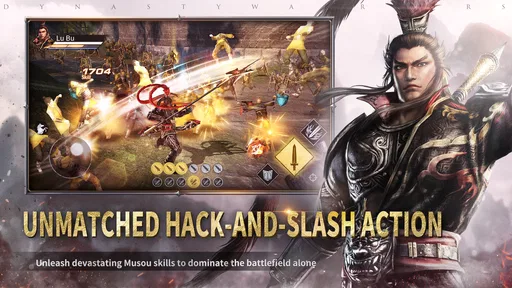

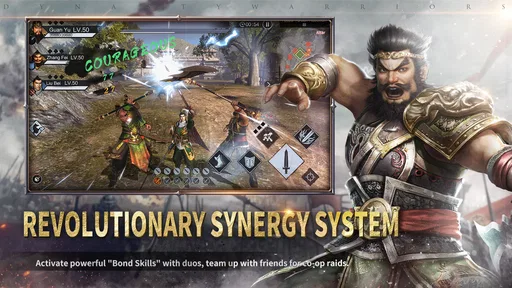
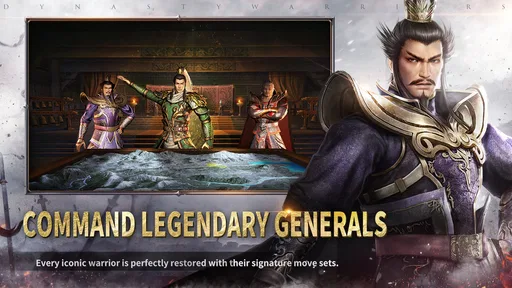
 Analysis by AppCompare
I approached Dynasty Warriors: Overlords expecting the familiar appeal of the Dynasty Warriors name: one powerful fighter moving through crowded battles while the screen fills with opponents. That basic promise is exactly what makes this action game easy to understand, but the mobile format changes how I enjoy it. Short sessions, touch controls, upgrade decisions, and the need to manage attention between attacks all matter more here than they would on a console.
Developed by NEOCRAFT LIMITED, the game is free to start and aimed at players aged 10 and over. It has attracted over 100 thousand installs and holds a 4.3 average from around 5.8 thousand ratings, which suggests that the familiar franchise identity is doing useful work in bringing players in. My experience is that the game is most appealing when I treat it as a repeatable mobile action routine rather than expecting a full console replacement.
How the everyday battle loop feels
The most comfortable way to play is to begin with a clear purpose. I do not open it simply to tap through every available activity. I decide whether I want a quick burst of combat, progress through the current content, or time spent improving my character. That small habit makes the game feel less cluttered and helps me avoid spending a session moving between menus without a meaningful goal.
The core attraction is straightforward: enter a fight, control a warrior, cut through groups of enemies, and keep moving toward the next objective. That rhythm is immediately readable, even if someone has never played a Dynasty Warriors title before. The large crowds create the sensation of power that fans expect, while the touch interface makes the experience more accessible than a control scheme packed with complicated button combinations.
I found that the best results come from treating movement and attacks as one decision rather than separate actions. Standing still and repeatedly striking may work against weaker opponents, but it becomes less reliable when the battlefield gets busy. I prefer to keep an escape direction in mind, attack into a group, then reposition before the screen becomes difficult to read. This is a simple habit, but it makes crowded encounters feel far less random.
That approach also helps during ordinary mobile interruptions. If I am playing during a commute or while waiting for an appointment, I can focus on the next small objective instead of trying to complete an enormous uninterrupted campaign session. The game suits that kind of stop-and-start use better than a slower role-playing game that requires long stretches of dialogue or careful exploration.
At the same time, the mobile structure can make progress feel more deliberate than the name might suggest. The excitement of defeating many enemies is immediate, but long-term improvement depends on returning to the game, making sensible upgrades, and choosing where to spend attention. Players who want nothing but uninterrupted arcade action may find the surrounding progression less exciting than the battles themselves.
Worth Reading Before You Choose

EA SPORTS FC Mobile 26 Is a Bigger Football Game, but It Takes Time

Flipboard Shows What News Apps Must Do Beyond the Feed

Switching to Android Auto Means Rethinking Your Driving Routine

Google Calendar Makes a Crowded Week Easier to Manage

Ludo King Makes the Most of the Minutes Between Plans

Baby Panda World Brings Quick Play to Modern Phones, but Its Game Library Feels Busy
What I do before entering a fight
My baseline routine is deliberately modest. I first check the current objective, look at the character I am taking in, and make sure I understand what the battle is asking me to do. Then I play one encounter with observation in mind rather than rushing to repeat it. I watch which enemies interrupt my attacks, where the battlefield becomes crowded, and whether I am losing time by chasing targets that are not important.
After that first attempt, I adjust one thing at a time. If survival is the problem, I change my positioning before assuming that I need a stronger character. If damage feels slow, I review my available improvements rather than randomly spending resources. This method is more useful than changing several variables together because I can tell what actually helped.
A practical tip is to avoid using every powerful option at the first sign of resistance. Saving a strong attack for a dense group or a more dangerous moment gives the battle a clearer shape. I also try not to follow enemies too far away from the main objective. Chasing a single target can make a supposedly easy encounter longer and can place me in a worse position for the next wave.
The game is at its most satisfying when I create a repeatable rhythm: inspect, fight, review, improve, and return. That rhythm is particularly useful for players who enjoy gradual mastery. It is less suitable for someone who wants every session to deliver a completely new mechanic or a radically different style of play.
Settings and controls worth checking early
Before settling into longer sessions, I recommend checking the available control and presentation options instead of accepting the initial setup automatically. Touch controls can feel very different depending on hand position, screen size, and how much visual information is competing for attention. A layout that feels comfortable in portrait-like one-handed use may be less practical when playing with both hands.
I pay special attention to whether the attack, movement, and ability controls are easy to reach without covering the battlefield. In a crowd-focused action game, missing a button because my thumb is in the wrong place is more frustrating than making a tactical mistake. I also prefer a layout that lets me keep enough of the enemy group visible to anticipate pressure from the sides.
Sound and visual presentation deserve a quick review as well. The impact of a large battle depends on readable effects, but too much visual noise can make it harder to notice an incoming threat. If the screen feels busy, I focus on clarity rather than spectacle. Likewise, I keep the volume at a level that makes combat feedback useful without making a short public session uncomfortable.
Device performance is another practical consideration. The game is listed for Android 7.0 or later, but compatibility alone does not guarantee that every phone will feel equally comfortable during crowded action. I would test a short session before committing to longer play, especially on an older device. Heat, battery drain, and touch responsiveness are not minor details when the main attraction is fast combat.
I also suggest checking the game after an update rather than assuming that personal settings will always feel identical. The current version is 1.0.3, and early versions of mobile games can change how menus, controls, or presentation feel over time. I do not rebuild my entire routine after every update, but I do make sure that important controls still sit where my hands expect them.
Faster patterns that improve ordinary sessions
The first useful pattern is to separate learning attempts from farming attempts. During a learning attempt, I watch the battlefield and accept that the result may be slower. During a repeat attempt, I use the route and timing I already understand. Mixing those two mindsets often leads to impatient decisions: I rush through an unfamiliar encounter, then repeat the same mistake because I never identified what caused it.
A second pattern is to build upgrades around a clear weakness. If I am frequently interrupted, I value improvements that help me stay effective under pressure. If the problem is that battles take too long, I look for ways to make my existing attacks more efficient. The important point is not to copy a supposed universal build; it is to make each improvement answer a problem I have actually seen.
I also like to use short sessions for maintenance and longer sessions for learning. A quick visit is enough to review progress or prepare for the next attempt. When I have more time, I tackle unfamiliar battles and pay attention to enemy spacing, objective order, and moments when I am overextending. This division keeps the game from feeling like every login must become a major commitment.
Another overlooked habit is to stop after a poor run when I know I am playing impatiently. Because the action is repetitive in a pleasant way, it is easy to keep retrying while attention is falling. More attempts do not automatically mean more progress. Sometimes the better decision is to leave, return later, and approach the same encounter with a clearer plan.
For players who enjoy the franchise but are new to mobile action games, I recommend learning the touch rhythm before worrying about speed. The goal is not to press everything as quickly as possible. It is to make movement, attacks, and defensive positioning feel predictable. Once that foundation is comfortable, faster play comes naturally and requires less frantic input.
Progression, spending, and the limits of the free entry
Being free to download makes the game easy to try, but it does not mean every player will experience it in the same way. In-app purchases range from $0.99 to $99.99 per item, so I would approach the store carefully and decide on a personal boundary before buying anything. The safest habit is to play long enough to understand whether the battle loop itself is enjoyable before spending money to accelerate progress.
I see purchases as most questionable when they are used to solve a problem I have not diagnosed. If I am struggling because I do not understand positioning, a purchase may make the next attempt easier without teaching me anything. If I already enjoy the game and simply want to support it or reduce a particular progression delay, the decision is more personal. Either way, I would avoid treating a stronger purchase as a substitute for learning the encounter.
The game is a better fit for players who enjoy gradual improvement and repeated battles than for players who dislike any form of resource management. The action gives immediate feedback, but the broader experience asks me to think about when an improvement is worthwhile and whether I should keep pushing forward or revisit earlier content. That combination is common in mobile games, yet it is especially noticeable here because the combat itself feels so direct.
Parents should also remember that the age guidance is Everyone 10+, while optional purchases can still make the game more financially demanding than its free starting point suggests. I would use the device’s purchase protections if a child will be playing. That is not a criticism of the combat design; it is simply sensible preparation for any free-to-start game with a wide purchase range.
Where experienced play still runs into friction
Even after the controls become familiar, the mobile format imposes limits. A touch screen cannot provide the same precision or physical feedback as a dedicated controller. When many enemies and effects occupy the screen, a small input error can feel more significant than it would on a console. I enjoy the convenience, but I do not mistake it for the same kind of control experience.
Screen size matters too. On a larger phone or tablet, it is easier to separate movement from attacks and keep track of the surrounding crowd. On a smaller screen, my hands can obscure useful information, especially during hectic moments. Players who are very sensitive to visual clutter may prefer a simpler action game with fewer simultaneous targets.
The repeated battle structure can also expose its own weakness. The satisfying part is cutting through a crowd, but repetition becomes noticeable if I am not setting small goals. I get more from the game when I am learning a new encounter, improving a specific weakness, or testing a more efficient routine. Without that purpose, the loop can begin to feel like maintenance rather than progress.
This is where alternatives may be better. A console Dynasty Warriors release is the stronger choice for someone who wants a larger-screen experience, more precise physical controls, and a session built around uninterrupted play. A simpler mobile action game may suit someone who wants immediate combat without as much surrounding progression. A traditional strategy game may be preferable for players who would rather plan from a distance than control a warrior directly.
On the other hand, those alternatives lose something that this game handles well: the ability to carry the recognizable crowd-battle fantasy into a convenient mobile routine. If I want a quick action session and already enjoy the Dynasty Warriors style, that convenience has real value. The trade-off is that I need to accept touch-control compromises and a more gradual mobile progression structure.
Who should try it and who should skip it
I would recommend it to fans of the franchise who want a portable version of its central action idea, especially those who enjoy repeating encounters until their movement and timing improve. It is also a reasonable starting point for newcomers who like dramatic crowd combat but do not want to learn a complicated control system immediately.
It is less convincing for players who demand a premium, controller-first experience from every action game. I would also suggest skipping it if free-to-start progression, optional purchases, or repeated battles are automatic deal-breakers. The game cannot remove those expectations simply because its combat is energetic.
For an everyday example, I can imagine playing one short encounter during a lunch break, reviewing what caused a failed attempt, and returning later to try again with a more focused upgrade or route. That is the kind of use where the game makes sense. It is not asking me to reorganize my day around it, but it rewards me when I return with a specific intention.
My verdict after settling into the routine
Dynasty Warriors: Overlords works because it understands the immediate appeal of its source series: the pleasure of feeling powerful in the middle of a crowded battlefield. Its strongest quality is not that it transforms the franchise into something entirely new, but that it makes the familiar action approachable in short mobile sessions.
My recommendation comes with a clear condition: play it as a mobile action game with a progression layer, not as a perfect substitute for a console installment. Check the controls, keep the battlefield readable, improve one weakness at a time, and use repeat attempts to learn rather than simply to grind. Those habits make the experience more controlled and more rewarding.
The current release, version 1.0.3, is free to begin and comes from NEOCRAFT LIMITED, so trying it carries little initial commitment beyond the time needed to see whether the loop suits you. I would give it a chance if you enjoy crowd combat and want something portable. I would pass if your priority is deep controller precision or a completely purchase-free progression path.
My final view is positive but measured: the best reason to play is the satisfying battlefield rhythm, while the main reason to hesitate is the mobile structure around it. Once I stopped expecting a console-sized experience and started using deliberate settings, short routines, and targeted upgrades, the game became much easier to appreciate. For the right player, that is enough to make it a worthwhile action game to keep installed.
Pros
- Fast-paced battles feel satisfying
- especially against large groups of enemies.
- Multiple officers offer varied skills
- weapons
- and team-building options.
- Story content gives fans of the Dynasty Warriors universe plenty to explore.
- Regular events can provide extra rewards and reasons to keep playing.
- Auto-battle and quick progression options make routine stages less demanding.
Cons
- Progress can become heavily dependent on upgrading and enhancing officers.
- Energy or time limits may interrupt longer play sessions.
- High-level content can be difficult without carefully optimized teams.
- The user interface may feel crowded for new players.
- Some rewards and features are tied to random draws or limited-time availability.
FAQs for Dynasty Warriors: Overlords
What is Dynasty Warriors: Overlords, and how does the gameplay work?
Dynasty Warriors: Overlords is a mobile action RPG based on the popular Three Kingdoms setting. You control famous warriors, complete story stages, fight large groups of enemies, and switch between characters during battles. Combat focuses on fast attacks, skill combinations, dodging, and timing powerful Musou-style abilities. Alongside the action, you can improve heroes, equipment, formations, and other progression systems.
Can I play Dynasty Warriors: Overlords offline?
The game is primarily designed as an online experience, so an internet connection is generally required to access the main features. Online connectivity supports account data, events, multiplayer activities, updates, rankings, and other live-service content. You should not expect the complete game to work offline. A stable Wi-Fi or mobile data connection is recommended, especially during downloads, cooperative battles, and longer play sessions.
Is Dynasty Warriors: Overlords free to download and play?
Dynasty Warriors: Overlords can typically be downloaded for free, but it includes optional in-app purchases. These may provide premium currency, character-related items, upgrade materials, bundles, or other conveniences. Progress is possible without spending money, although free players may need more time and careful resource management. Parents should also review purchase settings, since repeated small transactions can add up over time.
Does the game include multiplayer or competitive modes?
Yes, Dynasty Warriors: Overlords is built around more than simple solo missions. Depending on the available version and current events, players may find cooperative content, guild or alliance activities, competitive challenges, rankings, and other online modes. These features add variety and encourage regular play, but they can also involve stronger opponents and more demanding progression requirements. Some modes may unlock only after reaching specific account levels.
What devices and amount of storage does Dynasty Warriors: Overlords require?
The game is intended for relatively modern Android and iOS devices capable of handling detailed 3D graphics and large battles. Exact compatibility depends on the operating system version, device model, regional release, and future updates. You should keep considerably more free storage than the initial download size because additional game resources may be installed afterward. Closing background apps and using a stable connection can also improve performance.


